
Soccer, known as football to most of the world, is a game rich with history and full of fascinating trivia. Whether you’re a lifelong fan or just getting into the sport, there’s always something new to learn. From the quirky beginnings of the game to modern-day legends, soccer trivia is a great way to impress your friends. Let’s dive into some fun facts that will surely make you the star of your next soccer conversation.
Key Takeaways
- Soccer has roots going back thousands of years, with early versions played in ancient China, Greece, and Rome.
- The official rules of soccer, known as the Laws of the Game, were first established in 1863 in England.
- Pele, often called the greatest soccer player, scored over 1,000 goals in his career.
- The FIFA World Cup, held every four years, is the most-watched sporting event globally, even more than the Olympics.
- Soccer balls were originally made from animal bladders or stomachs, but today they’re crafted from synthetic materials for durability.
Historic Origins of Soccer
Ancient Roots of the Game
Soccer, or football as it’s known in most parts of the world, has a history that stretches back thousands of years. Ancient civilizations like the Chinese, Greeks, and Romans played games involving a ball and feet. The Chinese game of "Cuju" is often cited as one of the earliest forms, where players kicked a leather ball filled with feathers. Over time, these early games evolved and spread across different cultures, each adding their own twist.
Evolution of Soccer Rules
The transformation from these ancient games to modern soccer was gradual. In medieval Europe, "mob football" was a chaotic and often violent affair played between neighboring towns. It wasn’t until the 19th century in England that efforts were made to formalize the rules. In 1863, the Football Association was founded in Britain, marking the birth of modern soccer. The establishment of standardized rules helped transition soccer into a structured sport with clear guidelines.
The Birth of Modern Soccer
The 19th century was a pivotal time for soccer as it began to resemble the game we know today. The formation of the Football Association in England brought about a unified set of rules, differentiating soccer from rugby. This period also saw the rise of club teams and organized competitions, setting the stage for soccer’s global popularity. By the late 1800s, soccer had spread beyond Britain, capturing the hearts of players and fans worldwide.
Soccer’s journey from ancient ball games to a globally celebrated sport is a testament to its universal appeal and adaptability. The game’s rich history is woven into the fabric of numerous cultures, making it a shared passion and a common language across continents.
Iconic Soccer Players and Their Legacies
Pele: The King of Soccer
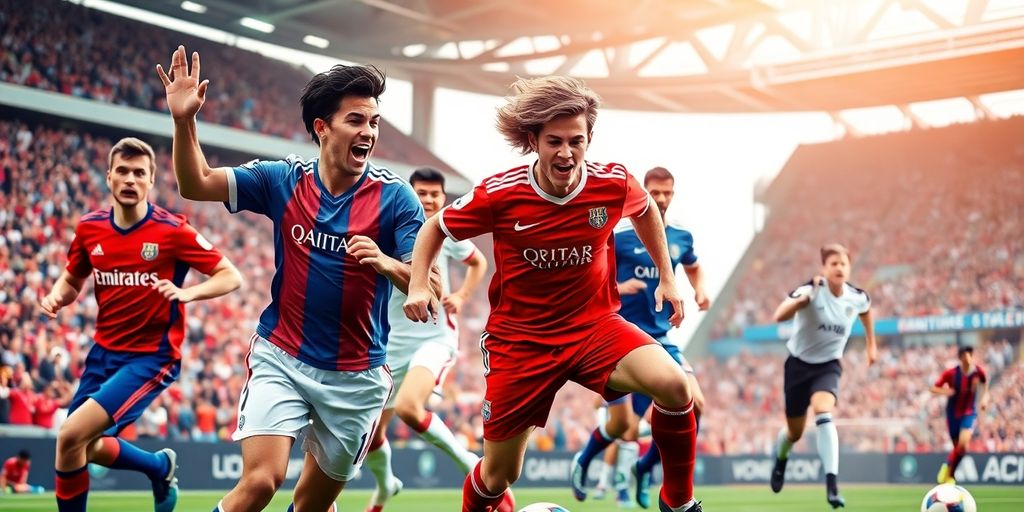
Pelé, often hailed as the greatest soccer player of all time, transformed the game with his incredible skill and charisma. He popularized the bicycle kick, a move that leaves fans in awe even today. Pelé’s career was marked by numerous records, including being the youngest player to score in a World Cup. His ability to score from almost any position made him a nightmare for defenders. Pelé’s influence extended beyond the field, as he became a global ambassador for soccer, promoting the sport’s values and inspiring countless young players.
Maradona’s Impact on the Game
Diego Maradona, known for his extraordinary dribbling skills and controversial "Hand of God" goal, left a lasting impact on soccer. His performance in the 1986 World Cup is legendary, where he single-handedly led Argentina to victory. Maradona’s ability to change the course of a game with a single touch made him a unique talent. Despite personal struggles, his passion for soccer never wavered, and he remains a beloved figure in Argentina and beyond.
The Rivalry of Messi and Ronaldo
In modern soccer, the rivalry between Lionel Messi and Cristiano Ronaldo is unparalleled. Both players have shattered records and redefined what it means to be a forward. Messi, with his incredible dribbling and vision, is often seen as a natural talent. Ronaldo, on the other hand, is known for his physical prowess and goal-scoring ability. Their competition has pushed each other to new heights, making every match an exciting spectacle. Their legacies will be remembered long after they hang up their boots.
Soccer legends like Pelé, Maradona, Messi, and Ronaldo have not only achieved greatness on the field but have also inspired generations of fans and players worldwide. Their stories remind us of the power of talent, dedication, and the beautiful game.
Unforgettable World Cup Moments
Historic World Cup Upsets
The World Cup has seen its fair share of shocking upsets that have left fans and pundits alike scratching their heads. One of the most memorable was when the United States defeated England 1-0 in 1950. This was a time when England was considered a powerhouse in soccer, making the loss even more surprising. Another unforgettable upset came in 2002 when Senegal, in their World Cup debut, beat the reigning champions France 1-0 in the opening match. These moments remind us that in soccer, anything can happen, no matter how stacked the odds seem.
Legendary World Cup Goals
Some goals are etched in the history of the World Cup, not just for their beauty, but for their impact. Diego Maradona’s infamous "Hand of God" goal against England in 1986 is one such moment. It was controversial but undeniably iconic. Then there’s Geoff Hurst’s hat-trick in the 1966 final, which helped England secure their first and only World Cup title. More recently, James Rodriguez’s stunning volley for Colombia against Uruguay in 2014 captured the world’s attention and won the Puskás Award for the best goal of the year.
Memorable World Cup Finals
The finals of the World Cup are where legends are made and dreams are realized. The 1970 final, where Brazil defeated Italy 4-1, is often hailed as one of the greatest displays of soccer artistry, with Pelé leading a team that played with flair and finesse. In 1998, the final saw France triumph on home soil, defeating Brazil 3-0, with Zinedine Zidane scoring twice with his head. More recently, the 2018 final between France and Croatia was a thrilling affair, with France emerging victorious 4-2, showcasing a new generation of talent led by Kylian Mbappé.
The World Cup is more than just a tournament; it’s a stage where history is written, and unforgettable stories unfold. Each edition brings its own drama, heroes, and memories that fans cherish for a lifetime.
Fascinating Soccer Trivia Facts
Unusual Soccer Records
Soccer is full of records, some of which are quite unusual. For instance, the fastest goal ever scored in a professional match was just 2.4 seconds after kickoff. This record was set by Nawaf Al-Abed in a Saudi Arabian league game. Another fascinating record involves the longest match ever played, which lasted an exhausting 3 hours and 23 minutes. Imagine playing soccer for that long! Then there’s the highest-scoring game, which saw a staggering 149 goals in a single match. Talk about a workout!
Bizarre Soccer Superstitions
Superstitions are common in soccer, with players and fans alike engaging in rituals to bring good luck. Some players wear the same pair of socks for every match, believing it brings them success. Others have more peculiar habits, like kissing the ball before a penalty kick. Interestingly, some teams have lucky mascots they believe help them win games. These rituals may seem odd, but for many in the soccer world, they are a vital part of the game.
Unexpected Soccer Innovations
Soccer has seen its fair share of innovations over the years. One of the most surprising is the introduction of goal-line technology, which helps referees determine if the ball has crossed the line. Another innovation is the vanishing spray, used by referees to mark the ten-yard line for free kicks. This simple yet effective tool has become a staple in modern soccer. Lastly, the introduction of video assistant referees (VAR) has revolutionized the way the game is officiated, ensuring more accurate decisions on the field.
Soccer’s popularity stems from its easy-to-understand rules, allowing anyone to play and enjoy the game. Its versatility means it can be played on various surfaces, making it accessible worldwide. The sport boasts a passionate fanbase, with historic club rivalries like Barcelona vs. Real Madrid and international matchups such as Brazil vs. Argentina, which evoke deep national pride and cultural significance. These elements combine to create a universal pastime that fosters community and excitement.
The Global Influence of Soccer
Soccer’s Cultural Impact Worldwide
Soccer isn’t just a game; it’s a cultural powerhouse that unites people across continents. From the bustling streets of Brazil to the quiet villages of Africa, soccer is a common thread that binds us all. It brings communities together, often serving as a platform for cultural expression. Fans paint their faces, wear jerseys, and sing anthems, creating a vibrant tapestry of traditions. This shared passion fosters a sense of belonging and identity, transcending borders and languages.
The Economics of Soccer
The business side of soccer is nothing short of massive. Clubs rake in billions through broadcasting rights, merchandise sales, and sponsorship deals. The English Premier League alone generates billions of dollars annually, showcasing soccer’s economic might. The sport creates jobs, from stadium staff to media personnel, fueling local economies. In many countries, soccer is a significant contributor to GDP, highlighting its role as an economic engine.
Soccer and Social Change
Soccer has long been a catalyst for social change. It provides a platform for addressing issues like racism, gender equality, and poverty. Campaigns like "Kick It Out" and "Say No to Racism" leverage the sport’s popularity to promote inclusivity and tolerance. Soccer stars often use their influence to support charitable causes, inspiring fans to engage in social activism. In many ways, soccer serves as a mirror to society, reflecting and shaping the world we live in.
Soccer is more than a sport; it’s a global phenomenon that unites diverse cultures and communities. The excitement of watching matches and the thrill of goals create a unique experience for fans. Legendary rivalries, such as El Clásico and the North West Derby, add to the sport’s allure, embodying pride and identity. Soccer transcends boundaries, serving as a shared language that connects people worldwide, while also engaging with social issues. Soccer’s cultural impact is profound, making it a powerful force for unity and change.
The Science Behind Soccer Skills

Physics of a Soccer Ball
Kicking a soccer ball isn’t just about brute force. It’s a blend of physics and skill. When you kick the ball, the angle and speed determine its trajectory. Ever notice how a well-placed kick can make the ball curve? That’s called the Magnus effect. The spin you give the ball creates a pressure difference, causing it to swerve mid-air.
Here’s a quick breakdown:
- Angle of Contact: Affects the ball’s height and distance.
- Spin: Determines the curve and swerve.
- Force: Impacts speed and power.
Biomechanics of Kicking
The biomechanics of kicking involve your entire body, not just your foot. From the swing of your leg to the twist of your hips, each movement contributes to a powerful kick. Here’s how it works:
- Approach: A few steps to gain momentum.
- Plant Foot: Stabilizes your body.
- Swing: Your leg swings like a pendulum.
- Follow Through: Ensures accuracy and power.
Psychology of a Winning Team
A winning team isn’t just about individual talent; it’s about teamwork and strategy. The psychology behind a successful team includes trust, communication, and a shared goal. Teams that bond off the field often perform better on it.
"A team’s success is often built on the invisible threads of trust and understanding, weaving players together into a cohesive unit."
In a nutshell, the science of soccer skills is a fascinating blend of physics, biomechanics, and psychology, making the game as much about brains as it is about brawn.
Soccer’s Greatest Clubs and Rivalries
Historic Club Rivalries
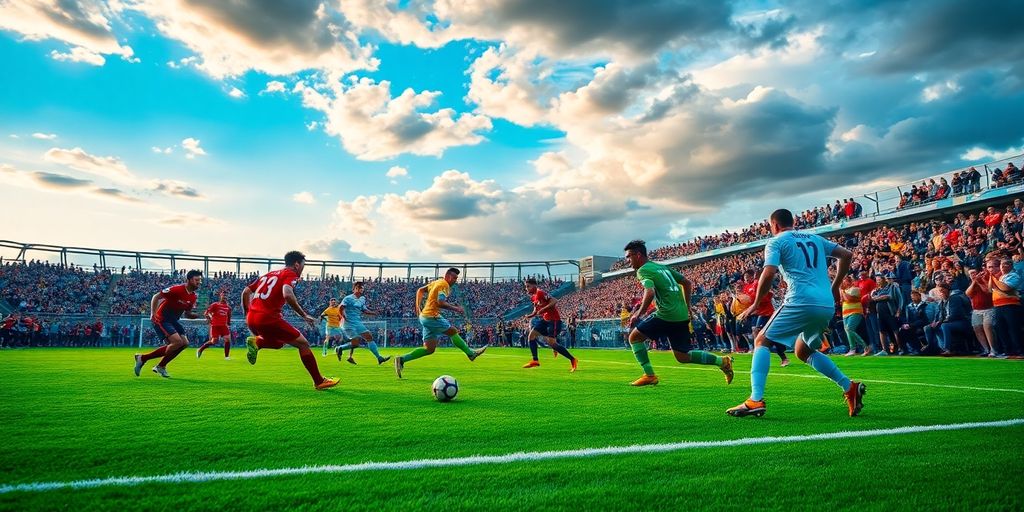
Soccer is full of rivalries that are more than just games; they’re epic battles. Some of these clashes have been going on for decades, fueled by history, pride, and sometimes even politics. One of the most famous rivalries is the El Clásico between Real Madrid and Barcelona. These two Spanish giants have been at each other’s throats for over a century, each vying for dominance in La Liga and beyond. In Argentina, the Superclásico between Boca Juniors and River Plate is a must-watch, with fans creating an electric atmosphere that’s hard to match. Across the English Channel, the North West Derby between Manchester United and Liverpool is another classic, with both teams boasting a rich history of success and a deep-seated dislike for each other.
Dominant Soccer Clubs
Some clubs have etched their names in the history books by consistently winning titles and setting records. Real Madrid, with their impressive haul of UEFA Champions League trophies, is a prime example of dominance on the European stage. In Italy, Juventus has been a powerhouse in Serie A, collecting numerous Scudettos over the years. Bayern Munich is another club that stands out, having won the Bundesliga more times than any other team in Germany. These clubs not only dominate domestically but also make their mark in international competitions, showcasing their prowess and attracting top talent from around the world.
The Rise of New Soccer Powerhouses
While traditional clubs continue to shine, new powerhouses are emerging, shaking up the soccer landscape. Paris Saint-Germain, backed by significant investments, has become a major force in French and European football, attracting stars like Neymar and Mbappé. Manchester City, once a middle-of-the-road team, has risen to prominence in the Premier League with a string of titles and a squad full of international stars. In the Portuguese League, teams like Benfica and Sporting CP continue to challenge each other, with their rivalry adding spice to the competition. These clubs are redefining what it means to be a soccer powerhouse, proving that with the right resources and management, any team can rise to the top.
Soccer isn’t just a game; it’s a tapestry of stories woven from fierce rivalries and legendary clubs. Every match is a new chapter, adding to the rich history of the sport.
Women in Soccer: Breaking Barriers
Pioneers of Women’s Soccer
Women’s soccer has come a long way since its early days. The first recorded women’s soccer match took place in 1895 in England, but it wasn’t until the 1970s that the sport began to gain real traction. Early pioneers like Lily Parr, who played for the famous Dick, Kerr Ladies team, were instrumental in showcasing the talent and passion of female players. Despite facing numerous obstacles, these women laid the groundwork for future generations.
The Growth of Women’s Leagues
The growth of women’s soccer leagues has been phenomenal over the past few decades. From the establishment of the Women’s United Soccer Association (WUSA) in the United States in 2001 to the rise of the Women’s Super League (WSL) in England, opportunities for women to play professionally have expanded significantly. Today, numerous leagues around the world provide a platform for female athletes to showcase their skills and compete at the highest levels.
Challenges and Triumphs in Women’s Soccer
Despite the progress, women’s soccer still faces challenges, such as pay disparity and limited media coverage. However, the successes cannot be overlooked. The FIFA Women’s World Cup has become a global event, drawing millions of viewers and inspiring young girls worldwide. The 2019 Women’s World Cup, held in France, was a turning point, highlighting the skill and competitiveness of female athletes.
Women’s soccer is not just about the game. It’s about breaking barriers, challenging stereotypes, and inspiring future generations. It’s about showing the world that women can excel in any field they choose.
The future of women’s soccer looks promising, with increasing investment and interest in the sport. Grassroots movements and influential players continue to drive change, ensuring that women’s soccer remains a powerful tool for empowerment and community building. Learn more about the evolution of women’s soccer.
Wrapping Up the Soccer Trivia Adventure
So there you have it, a bunch of fun soccer trivia to keep in your back pocket for the next time you’re hanging out with friends. Whether you’re a die-hard fan or just someone who enjoys a good game now and then, these tidbits are sure to spark some interesting conversations. Maybe you’ll even stump a few people with your newfound knowledge! Soccer is more than just a game; it’s a global phenomenon that brings people together. So, keep exploring, keep learning, and most importantly, keep enjoying the beautiful game. Who knows, maybe you’ll be the trivia champ at your next gathering!
Frequently Asked Questions
When did soccer first begin?
Soccer has roots that go back about 3,000 years, but the modern version started in England around 150 years ago.
Why is soccer so popular?
Soccer is loved worldwide because it’s easy to play, only needing a ball and some space, and it brings people together.
Who are some famous soccer players?
Famous players include Pele, known as the King of Soccer, Maradona, and the modern stars Messi and Ronaldo.
What is the World Cup?
The World Cup is a big soccer event that happens every four years, where teams from all over the world compete.
How many players are on a soccer team?
Each soccer team has 11 players on the field, including positions like goalkeeper, midfielder, and striker.
What is a soccer field called?
A soccer field is called a pitch, and it’s a big grassy area where the game is played.