
Indoor soccer is a fast-paced game that requires quick thinking and nimble feet. Whether you’re a beginner or a seasoned player, there’s always room to improve your skills and understanding of the game. This article will guide you through some practical tips to help you excel in indoor soccer, focusing on ball control, teamwork, tactics, fitness, and more. Let’s dive into these indoor soccer tips to elevate your game.
Key Takeaways
- Improve your ball control by practicing with both feet and under pressure.
- Communication with your team is crucial for success on the field.
- Understand your role in both offense and defense to make better decisions.
- Incorporate agility and endurance drills into your training routine.
- Avoid common mistakes like over-dribbling and poor spacing.
Mastering Ball Control and Dribbling
Techniques for Effective Dribbling
Dribbling in indoor soccer isn’t just about speed; it’s about precision and control. One effective way to enhance your dribbling skills is by practicing around cones. This not only boosts agility but also helps in mastering the use of both the inside and outside of your feet. Challenge yourself to complete these drills swiftly while maintaining control. Here are some key techniques:
- Inside Cut: Use the inside of your foot to change direction quickly.
- Outside Cut: Employ the outside of your foot for sharper turns.
- Stepovers: Trick defenders by stepping over the ball and changing direction.
Improving Ball Control Under Pressure
Ball control is crucial, especially when opponents are breathing down your neck. To get better at this, practice under simulated pressure conditions. Try small-sided games where space is tight. This forces you to make quick decisions and maintain possession. Focus on:
- Keeping the ball close to your feet.
- Using your body to shield the ball from opponents.
- Practicing quick passes to escape tight situations.
Using Both Feet for Better Control
Being able to use both feet effectively is a game-changer. It not only confuses defenders but also gives you more options in tight spaces. Spend time each session practicing with your non-dominant foot. Here’s how you can improve:
- Dribble using your weaker foot during warm-ups.
- Practice passing and shooting with both feet.
- Set up drills that force you to use your non-dominant foot.
“In indoor soccer, the ball moves fast, and so should your feet. The more comfortable you are using both feet, the more unpredictable you’ll be to your opponents.”
For those looking to up their game, focusing on these soccer dribbling drills can significantly enhance your ball control and dribbling skills.
Enhancing Team Communication and Cohesion

Importance of Verbal and Non-Verbal Communication
In indoor soccer, communication goes beyond just shouting instructions. Effective communication is about being clear and concise, both verbally and non-verbally. Verbal cues can be as simple as calling for the ball or directing teammates to mark opponents. Non-verbal communication, such as hand signals or eye contact, plays a crucial role when the environment is too noisy or fast-paced.
Consider setting up drills that require players to use both forms of communication. This practice will help them understand each other’s signals and intentions better, leading to smoother gameplay.
Building Trust Among Teammates
Trust is the backbone of any successful team. When players trust one another, they are more likely to take risks and support each other on the field. Building trust involves more than just playing together; it requires understanding each other’s strengths and weaknesses and respecting them.
Here are a few ways to build trust:
- Encourage open discussions about game strategies and feedback sessions.
- Engage in team-building activities off the field.
- Celebrate successes and learn from failures together.
An indoor soccer team that trusts each other plays with a sense of unity and purpose, making them formidable opponents.
Practicing Set Pieces for Better Coordination
Set pieces like free kicks and corner kicks are excellent opportunities to score, but they require precise coordination. Practicing these plays can significantly boost team cohesion. Each player must know their role and position to execute these plays effectively.
Consider the following tips for practicing set pieces:
- Assign specific roles to each player during set pieces.
- Rehearse different scenarios to adapt to the opponent’s defense.
- Use video analysis to review and improve set piece execution.
By focusing on these aspects, teams can improve their coordination and increase their chances of scoring during crucial moments in the game.
Developing Tactical Awareness and Positioning
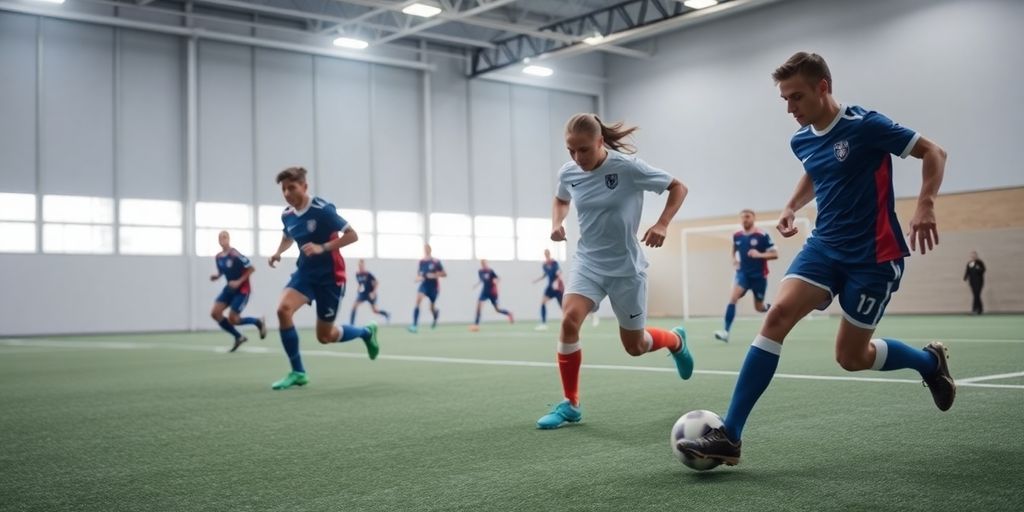
Understanding Defensive and Offensive Roles
In indoor soccer, knowing your role on the field is like having a map in a new city. Every player must understand their position, whether defending or attacking. Defenders need to keep their shape tight, making it tough for the opposition to break through. On the flip side, attackers should focus on creating space and finding the right moment to strike.
- Defenders should focus on maintaining a compact shape to minimize spaces for opponents to exploit.
- Midfielders act as the link between defense and attack, ensuring smooth transitions.
- Forwards need to exploit gaps in the defense and take advantage of scoring opportunities.
Exploiting Space in Small-Sided Games
Small-sided games are all about using the available space smartly. With fewer players, there’s more room to maneuver, making it critical to recognize and exploit open spaces quickly. Players should constantly move to create passing lanes and stretch the opposition’s defense.
- Be aware of your surroundings and always look for open spaces.
- Use quick passes to move the ball efficiently and keep the opponent on their toes.
- Encourage off-the-ball movement to create more options and disrupt the opponent’s shape.
Mastering Quick Transitions Between Phases
Transitions are the heartbeat of indoor soccer. The ability to switch from defense to attack in a heartbeat can catch opponents off guard. Speed and decisiveness are key here. When winning the ball, look for quick outlets to launch a counterattack. Similarly, when losing possession, players should immediately press to regain control or fall back to defend.
- Practice drills that focus on quick changes from defense to attack.
- Encourage players to think one step ahead, anticipating the next pass or move.
- Use short, sharp communication to coordinate movements during transitions.
Indoor soccer demands quick thinking and adaptability. Each player should strive to be aware of their role, understand how to exploit space, and be ready to switch gears between defense and attack. This approach not only improves individual performance but also enhances team cohesion and effectiveness.
Boosting Fitness and Conditioning for Indoor Soccer
Incorporating Agility and Speed Drills
To thrive in indoor soccer, agility and speed are your best friends. Incorporating drills like ladder exercises and cone drills can significantly improve your footwork and quickness. These drills not only enhance your ability to change direction swiftly but also boost your overall coordination on the court. Regular practice of these drills can turn you into a more dynamic player.
Endurance Training for High-Intensity Matches
Indoor soccer is fast-paced, demanding high levels of stamina. To keep up, endurance training is crucial. Consider integrating activities such as interval running or circuit training into your routine. These exercises simulate the intense bursts of energy needed during a match, helping you maintain peak performance throughout the game.
Balancing Fitness with Skill Development
While building your fitness, it’s important not to neglect skill development. A balanced approach ensures you’re not just fit but also technically sound. Focus on exercises that combine fitness elements with ball control and passing drills. This way, you enhance both your physical and technical abilities, making you a well-rounded player.
In the world of indoor soccer, balancing endurance with skill is key. It’s not just about running fast or being strong, but about how you use these attributes to control the game. Keep pushing your limits, and remember, every practice is a step towards mastering the sport.
Improving Shooting and Scoring Techniques
Practicing Shots from Various Angles
When it comes to scoring in indoor soccer, variety is key. Practicing shots from different angles helps players adapt to real-game situations where the perfect shot is rarely available. Start by positioning yourself at various spots around the goal and aim for different corners. This not only improves accuracy but also builds confidence in taking shots from less-than-ideal positions.
- Set up cones to mark different shooting spots.
- Practice shooting with both feet to enhance flexibility.
- Gradually increase the difficulty by adding defenders or obstacles.
Using Both Feet for Shooting
Relying on one foot can make you predictable. By using both feet, you become a more versatile player, capable of surprising the goalkeeper. Begin by practicing simple passes with your weaker foot, then progress to shooting drills. Consistent practice will help you develop power and precision.
- Warm up with passing drills using your weaker foot.
- Practice shooting at the goal with both feet.
- Challenge yourself with timed drills to simulate match pressure.
Enhancing Accuracy and Power
Accuracy and power are crucial for effective shooting. To boost these, focus on your stance and follow-through. Keep your eyes on the ball and aim for the lower corners of the goal. Plyometric exercises can also help increase leg strength, contributing to more powerful shots.
“In indoor soccer, the ability to shoot accurately and with power can be the difference between winning and losing. Mastering these skills requires dedication and practice, but the payoff is worth it.”
Consider incorporating a mix of strength training and technical drills to refine your shooting technique. Remember, consistent practice is the foundation of improvement.
Avoiding Common Mistakes in Indoor Soccer

Preventing Over-Dribbling in Tight Spaces
In the confined spaces of indoor soccer, it’s easy to get carried away with dribbling. Over-dribbling can lead to turnovers and missed opportunities. Instead of trying to weave through multiple defenders, focus on quick passes and maintaining possession. Use your teammates to create space and open up the field. Remember, indoor soccer is about speed and teamwork, not just individual skill.
Maintaining Proper Spacing and Positioning
Proper spacing is crucial in indoor soccer to avoid congestion and ensure effective play. Players should spread out to create passing lanes and make it easier to transition between defense and attack. Pay attention to your positioning relative to the ball and your teammates. Effective spacing not only improves your team’s offensive options but also helps in maintaining a solid defensive structure.
Ensuring Consistent Communication on the Field
Communication is the backbone of any successful soccer team. Whether it’s calling for the ball, directing teammates, or alerting others to defensive threats, clear and constant communication can prevent errors and improve team cohesion. Use both verbal cues and hand signals to communicate effectively. Silence on the field often leads to misunderstandings and missed plays. Don’t underestimate the power of a well-timed shout or gesture to guide your team.
Utilizing Indoor Soccer Equipment Effectively
Choosing the Right Footwear for Indoor Surfaces
Selecting the right footwear is like picking the right tool for a job. Indoor soccer shoes are designed to provide better grip and support on hard surfaces. Look for shoes with flat, rubber soles that offer excellent traction. This ensures you won’t be slipping around when making those quick turns or sudden stops. Also, consider the fit. Too tight, and you’ll be in pain; too loose, and you’ll lose control.
Using Walls to Your Advantage
The walls in indoor soccer aren’t just boundaries—they’re strategic allies. You can use them for quick passes or to outmaneuver opponents. Practice bouncing the ball off the wall to perfect your timing and control. It’s a great way to simulate pressure situations where you need to make a play without much space.
Selecting Appropriate Training Gear
When it comes to training gear, think beyond the basics. Sure, you need a ball and a goal, but what about cones, agility ladders, or resistance bands? These tools can help improve your speed, agility, and strength. Agility ladders, for instance, are excellent for sharpening your footwork. Make sure your gear is portable and easy to set up, so you can focus more on training and less on logistics.
Equip yourself with the right tools, and every practice session becomes an opportunity to hone your skills and improve your game. Whether you’re bouncing the ball off a wall or sprinting through an agility drill, the right equipment can make all the difference.
Conclusion
Wrapping up, indoor soccer is all about blending skill, strategy, and teamwork. It’s not just about kicking the ball around; it’s about understanding the game, working with your teammates, and constantly improving your skills. Whether you’re playing for fun or aiming to win, remember that practice and dedication are key. Keep pushing your limits, stay focused, and most importantly, enjoy the game. After all, soccer is as much about having fun as it is about competition. So lace up those shoes, hit the field, and give it your all!
Frequently Asked Questions
How can I improve my ball control in indoor soccer?
To get better at ball control, practice using both feet and work on dribbling in tight spaces. Try different dribbling techniques like the inside and outside cut.
Why is communication important in indoor soccer?
Communication helps players work together, avoid mistakes, and make quick decisions. Both talking and using signals can keep the team organized.
What are some good exercises to boost fitness for indoor soccer?
Agility drills, sprints, and endurance training are great for improving fitness. These exercises help players keep up with the fast pace of indoor soccer.
How do I choose the right shoes for indoor soccer?
Pick shoes with good grip for indoor surfaces. They should be comfortable and offer support to help you move quickly without slipping.
What are common mistakes to avoid in indoor soccer?
Avoid over-dribbling, keep good spacing, and always communicate with teammates. These mistakes can lead to losing the ball or missing opportunities.
How can I practice shooting with both feet?
Start by shooting from different angles with each foot during practice. Focus on accuracy and power to become more versatile in games.