
This article is a complete guide for anyone who wants to learn how to play soccer. Whether you’re a beginner or just looking to brush up on your skills, this guide will break down the basics of the game, from understanding the field to mastering essential skills. We will also cover important soccer rules to help you play better and enjoy the game more.
Key Takeaways
- Soccer is played with two teams trying to score goals by getting the ball into the other team’s net.
- Understanding basic soccer terms helps you follow the game better.
- Each player has a specific role, like forwards who score and defenders who stop the other team.
- Knowing the rules, like offside and fouls, is important for fair play.
- Having the right gear, including a good ball and proper shoes, can improve your performance.
Understanding the Basics of Soccer

Soccer is a fun and exciting game played all over the world. The main goal of soccer is to score more goals than the other team. Here are some important things to know about the game:
The Objective of the Game
- Each team tries to kick the ball into the opponent’s goal.
- A match is played in two halves, usually lasting 45 minutes each.
- The team with the most goals at the end wins.
Essential Soccer Terminology
- Goalkeeper: The player who guards the goal.
- Offside: A rule that prevents players from gaining an unfair advantage.
- Foul: An action that breaks the rules, often resulting in a free kick.
The Role of Each Player
- Forwards: They focus on scoring goals.
- Midfielders: They help both defense and offense.
- Defenders: Their job is to stop the other team from scoring.
Understanding the basic rules of soccer is crucial for enjoying the game. Remember, a standard soccer match has two teams of 11 players, including a goalkeeper. In youth soccer, teams can be smaller. The game is all about teamwork and having fun!
Getting to Know the Soccer Field
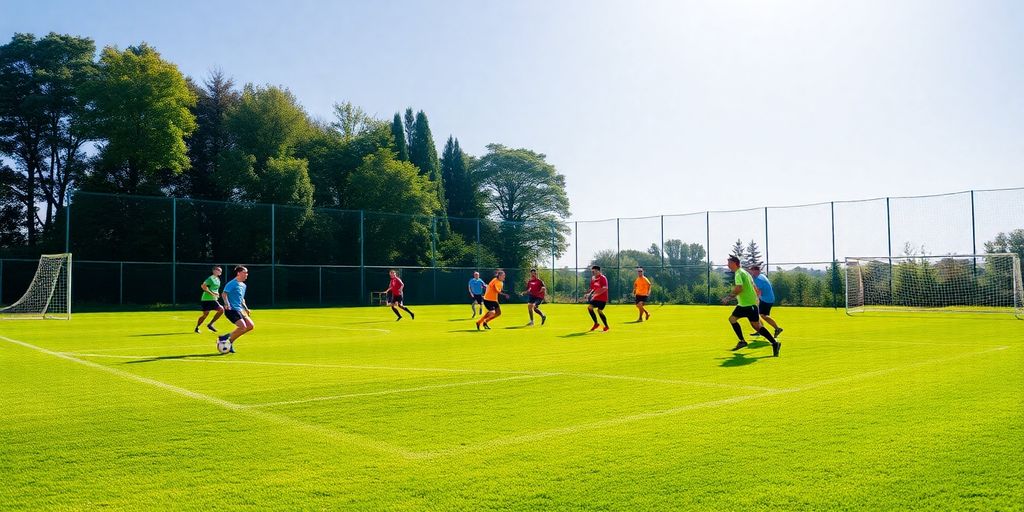
Dimensions and Markings
Understanding the dimensions of a soccer field is crucial for both players and fans. The field must be rectangular, with the following measurements:
- Length: Between 100 yards (90m) and 130 yards (120m)
- Width: Between 50 yards (45m) and 100 yards (90m)
- Goal dimensions must also follow FIFA standards.
Understanding the Goal Area
The goal area is a key part of the field. It is where the goalkeeper can handle the ball and where certain free kicks are taken. Here are some important points:
- The goal area is 6 yards (5.5m) from the goal line.
- It is marked by a rectangle in front of the goal.
- Players must be outside this area during goal kicks.
The Center Circle and Its Purpose
The center circle is located in the middle of the field and serves a few important functions:
- It has a radius of 10 yards (9.15m).
- During kick-off, players from the opposing team must stay outside this circle.
- It helps in organizing the game and ensuring fair play.
Knowing the layout of the soccer field helps players understand where to be and what to do during a game. Understanding these areas can improve your gameplay significantly!
Mastering the Fundamental Skills
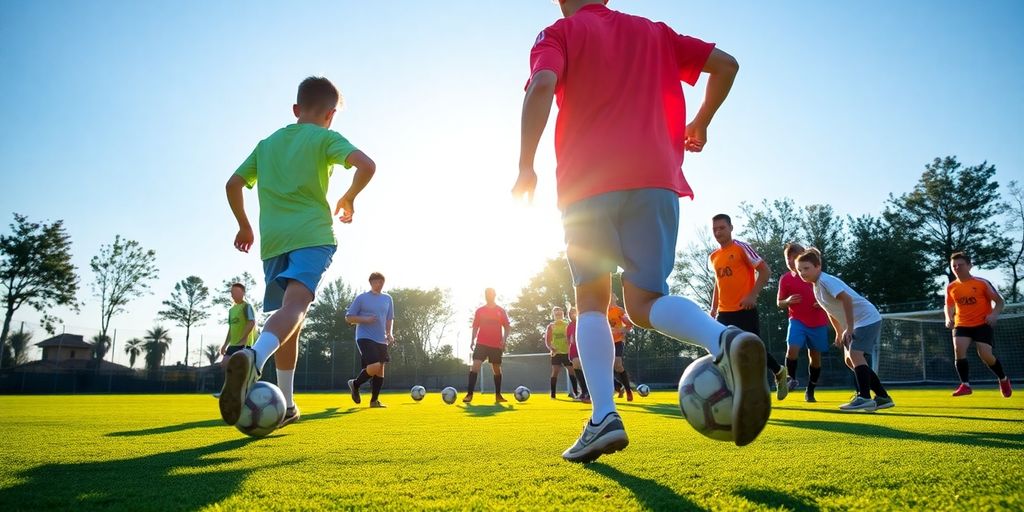
Dribbling Techniques
Dribbling is one of the most important skills in soccer. It allows players to move the ball while avoiding defenders. Here are some key points to remember:
- Use both feet to control the ball.
- Keep the ball close to your body.
- Practice changing direction quickly.
Passing and Receiving
Passing is essential for teamwork. Good passing helps your team move the ball effectively. Here are some tips:
- Use the inside of your foot for accurate passes.
- Always look for your teammates before passing.
- Practice receiving the ball with soft touches.
Shooting with Precision
Shooting is how you score goals. Practicing your shooting technique is crucial. Here are some ways to improve:
- Aim for the corners of the goal.
- Use your laces for powerful shots.
- Follow through with your kick for better accuracy.
Mastering these skills will help you become a better player. Focus on practicing regularly to see improvement.
Remember, the top fundamental soccer skills every player must know include dribbling, passing, and shooting. Training these skills will lead to faster improvement and development in your game.
Learning the Rules of Soccer
Offside Rule Explained
The offside rule can be tricky, but it’s important to understand. A player is considered offside if they are closer to the opponent’s goal line than both the ball and the second-to-last defender when the ball is played to them. Here are some key points to remember:
- A player cannot be offside if they are in their own half of the field.
- Being in an offside position is not a foul by itself; the player must be involved in the play.
- The referee makes the final call on offside, so players should always be aware of their positioning.
Fouls and Penalties
Fouls happen when a player breaks the rules, and they can lead to free kicks or penalties. Here are some common fouls:
- Tripping or pushing an opponent.
- Holding or grabbing a player’s jersey.
- Dangerous play, like kicking high near another player’s head.
When a foul occurs inside the penalty area, a penalty kick is awarded to the opposing team. This is a crucial moment in the game!
The Importance of Fair Play
Fair play is essential in soccer. It means playing honestly and respecting the rules and opponents. Here are some ways to promote fair play:
- Always shake hands with opponents after the game.
- Respect the referee’s decisions, even if you disagree.
- Encourage teammates and support each other on and off the field.
Understanding the rules of soccer is vital for enjoying the game. Knowing what to expect can make playing and watching much more fun!
Equipment and Gear Essentials
Choosing the Right Soccer Ball
When picking a soccer ball, size matters. Here are some key points to consider:
- Size: Make sure to choose the right size for your age group.
- Material: Look for a ball made of durable materials.
- Weight: A good ball should feel comfortable to kick.
Essential Protective Gear
Safety is important in soccer. Here are the must-have protective items:
- Shin Guards: Protect your legs from kicks and falls.
- Goalkeeper Gloves: If you’re a goalie, these help you catch the ball better.
- Mouthguard: Protect your teeth during play.
Proper Footwear for Different Surfaces
Wearing the right shoes can make a big difference. Consider these options:
- Soccer Cleats: Best for grass fields.
- Turf Shoes: Great for artificial surfaces.
- Indoor Shoes: Use these for playing inside.
Remember, having the right equipment can help you play better and stay safe on the field!
Strategies and Formations
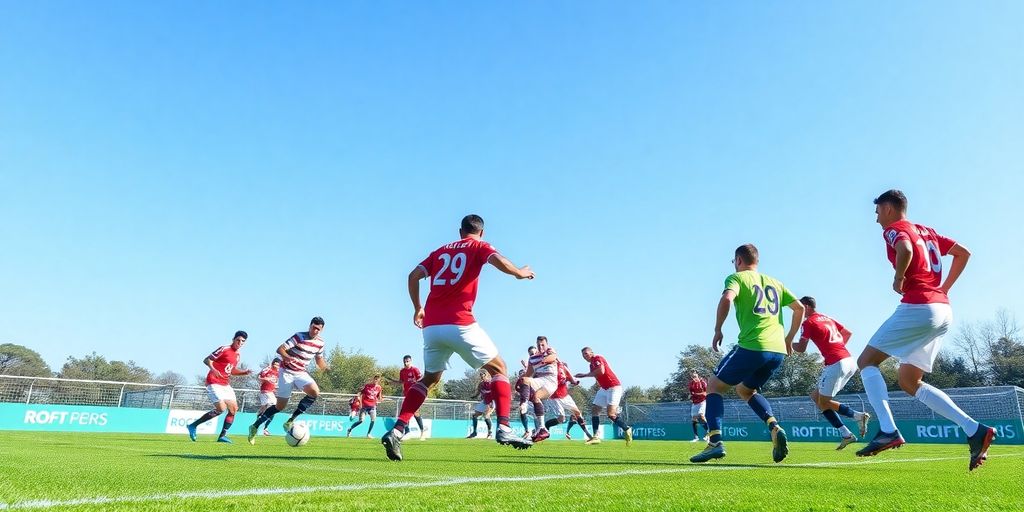
Understanding Different Formations
In soccer, formations are crucial for organizing the team on the field. Different formations can change how a team plays. Here are some common formations:
- 4-4-2: This is a classic formation with four defenders, four midfielders, and two forwards.
- 4-3-3: This formation focuses on attacking, with three forwards and three midfielders.
- 3-5-2: This setup has three defenders and five midfielders, allowing for strong control in the middle of the field.
Offensive and Defensive Strategies
Teams need to balance offense and defense. Here are some strategies:
- Pressing: This means putting pressure on the opponent to win the ball back quickly.
- Counter-Attacking: This strategy involves quickly moving the ball forward after winning it back, catching the opponent off guard.
- Possession Play: Keeping the ball for longer periods to control the game and create chances.
Adapting to Opponents’ Tactics
Every team has its own style of play. It’s important to adjust your strategy based on the opponent. Here are some tips:
- Study their formation: Knowing how they set up can help you find weaknesses.
- Change your formation: If the opponent is strong in one area, consider switching to a more defensive setup.
- Communicate with teammates: Always talk to each other about what’s working and what isn’t.
Understanding formations and strategies is key to playing soccer effectively. By knowing how to adapt, you can improve your game significantly.
In summary, learning about soccer formations is essential for beginners. It helps players understand their roles and how to work together as a team. The right strategy can make all the difference in a match!
Fitness and Conditioning for Soccer
Building Stamina and Endurance
To play soccer well, you need to have good stamina. This means you can run for a long time without getting tired. Here are some ways to build your stamina:
- Run regularly: Start with short distances and gradually increase.
- Interval training: Mix short bursts of fast running with slower jogging.
- Cross-training: Try other sports like swimming or cycling to improve your overall fitness.
Strength Training for Soccer Players
Strength is important for soccer players. It helps you kick harder and tackle better. Here are some exercises to consider:
- Squats: Great for building leg strength.
- Lunges: Helps with balance and strength.
- Push-ups: Strengthens your upper body.
Flexibility and Injury Prevention
Staying flexible can help you avoid injuries. Here are some tips:
- Stretch before and after games: This keeps your muscles loose.
- Yoga: Helps improve flexibility and balance.
- Warm-up properly: Always do a warm-up before playing to prepare your body.
Remember, fitness is key to playing soccer well. If you work on your stamina, strength, and flexibility, you’ll be a better player. Soccer players must also develop and retain a high level of aerobic and anaerobic conditioning, speed, agility, strength, and power.
Wrapping It Up
In conclusion, playing soccer is not just about kicking a ball around. It’s about teamwork, having fun, and enjoying the game. Remember to practice your skills, work with your teammates, and always keep a positive attitude. Whether you’re just starting out or have been playing for a while, the most important thing is to enjoy yourself. So grab a ball, find some friends, and get out there on the field!
Frequently Asked Questions
What is the main goal of soccer?
The main goal of soccer is to score more goals than the other team. You do this by getting the ball into the opponent’s net.
How long does a soccer game last?
A typical soccer game lasts 90 minutes, divided into two halves of 45 minutes each. There may be added time at the end.
What equipment do I need to play soccer?
To play soccer, you need a soccer ball, proper shoes, shin guards, and comfortable clothing. It’s important to have the right gear to stay safe.
Can I use my hands in soccer?
In soccer, players cannot use their hands to touch the ball, except for the goalkeeper. The goalkeeper can use their hands within their own penalty area.
What happens if a player commits a foul?
If a player commits a foul, the other team gets a free kick. If the foul is serious, the referee may give a penalty kick or even a yellow or red card.
How do teams score points?
Teams score points by kicking the ball into the other team’s goal. Each goal counts as one point.