
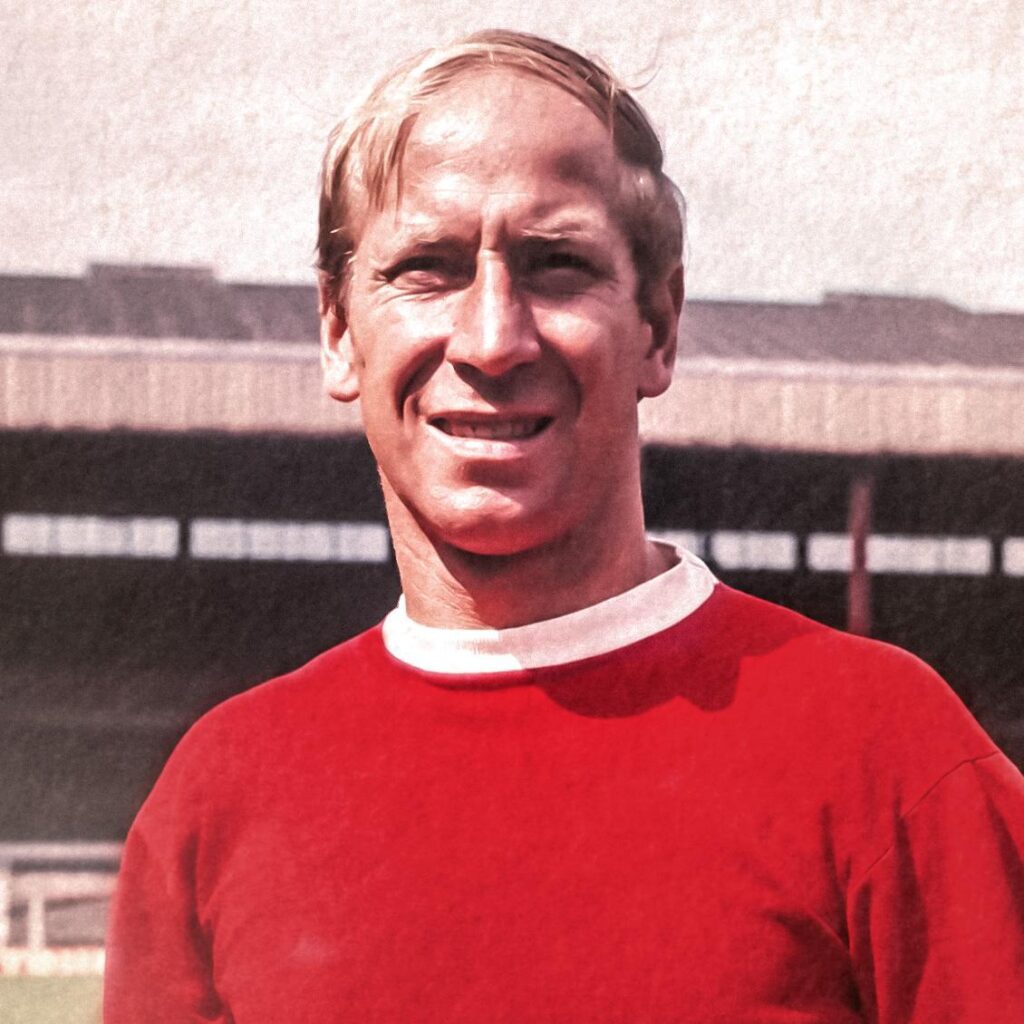
Sir Bobby Charlton stands as one of the most iconic figures in the world of soccer. Known for his exceptional talent, sportsmanship, and contributions to the game, Charlton’s legacy spans decades and his impact on the sport is immeasurable.
This article delves into the life and career of Sir Bobby Charlton, exploring his journey from a young football enthusiast to one of the greatest players in history.
Early Life and Family
Robert “Bobby” Charlton was born on October 11, 1937, in Ashington, Northumberland, England. He grew up in a family passionate about football. His mother, Cissie Charlton, was a cousin of the legendary Jackie Milburn, and his older brother, Jack Charlton, also became a prominent footballer, playing for Leeds United and the England national team.
Charlton’s football journey began at a young age, playing for his school team and local club. His talent was evident early on, and he was soon scouted by Manchester United.
Manchester United and the Munich Air Disaster
Charlton joined Manchester United’s youth academy in 1953 and made his first-team debut in 1956. His rise to prominence was rapid, and he quickly became a key player for the team. However, tragedy struck on February 6, 1958, when the Munich air disaster claimed the lives of 23 people, including eight Manchester United players. Charlton survived the crash and went on to play a crucial role in rebuilding the team under the management of Sir Matt Busby.
The Busby Babes
Before the disaster, Charlton was part of the “Busby Babes,” a group of young, talented players nurtured by Matt Busby. The team was known for its attacking style and youthful exuberance. Charlton’s versatility allowed him to play in various positions, contributing significantly to the team’s success.
International Career and World Cup Triumph
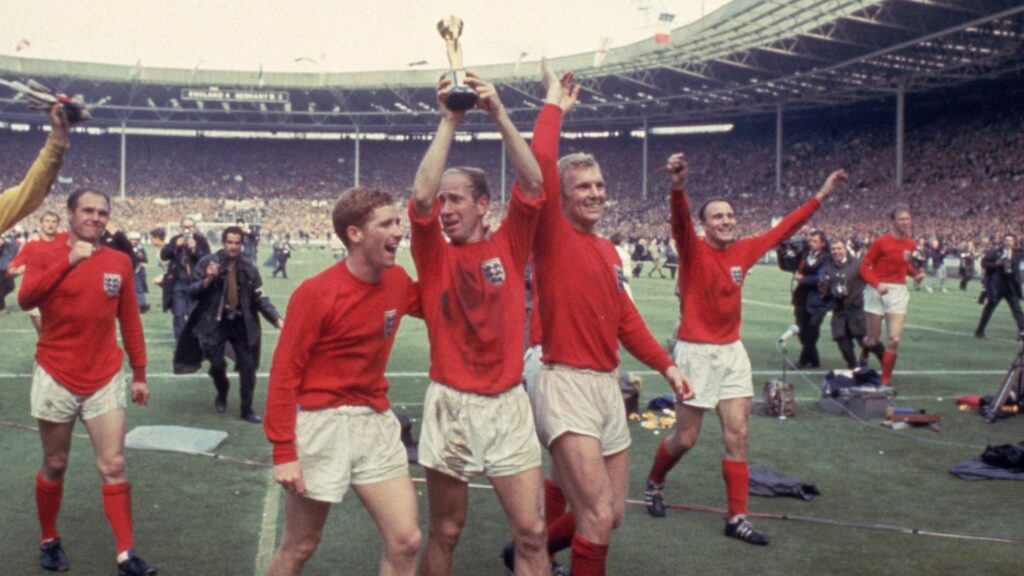
Charlton made his debut for the England national team in 1958. His international career was illustrious, but the pinnacle came in 1966 when he helped England win their first and only FIFA World Cup. Charlton was instrumental in England’s success, scoring crucial goals in the tournament and being named the European Footballer of the Year in 1966.
Key Matches in the 1966 World Cup
- Quarter-Final against Argentina: Charlton’s performance was pivotal in England’s 1-0 victory.
- Semi-Final against Portugal: Charlton scored both goals in a 2-1 win, sending England to the final.
- Final against West Germany: Although he didn’t score, Charlton’s leadership and midfield dominance helped England secure a 4-2 victory.

Later Career and Retirement
Charlton continued to play for Manchester United until 1973, finishing his club career with 758 appearances and 249 goals, making him one of the club’s all-time top scorers. He played his final international match in 1970, having earned 106 caps and scored 49 goals for England.
Post-Playing Career
After retiring as a player, Charlton remained involved in football. He managed Preston North End briefly and later became a director at Manchester United. His contributions to football were recognized with numerous honors, including a knighthood in 1994.
Legacy and Honors
Sir Bobby Charlton’s legacy is enshrined in football history. His contributions to Manchester United, the England national team, and the sport as a whole are celebrated worldwide. He was inducted into the English Football Hall of Fame and remains a respected ambassador for the game.
Summary of Achievements
- 1966 FIFA World Cup winner
- 1966 European Footballer of the Year
- 3-time English First Division champion with Manchester United
- 1968 European Cup winner with Manchester United
- Inducted into the English Football Hall of Fame
- Knighted in 1994 for services to football
- Manchester United’s second all-time top scorer
Conclusion
Sir Bobby Charlton’s life and career are a testament to his extraordinary talent, resilience, and dedication to football. His journey from a young boy in Ashington to a global football icon is inspiring, and his legacy will continue to influence the sport for generations to come.
Career Highlights
- Born on October 11, 1937, in Ashington, England.
- Survived the Munich air disaster in 1958.
- Integral part of Manchester United’s rebuild and success post-disaster.
- Helped England win the 1966 FIFA World Cup.
- European Footballer of the Year in 1966.
- Retired with 758 appearances and 249 goals for Manchester United.
- Knighted in 1994 for his services to football.
Sir Bobby Charlton’s remarkable life and career continue to be a source of inspiration and admiration in the world of soccer. His story is one of triumph over adversity, immense skill, and unwavering dedication to the beautiful game.