
Soccer in the Olympics has a rich and varied history, with its roots stretching back over a century. From its early days, when only a handful of teams competed, to the present, where it stands as a showcase for emerging talents, Olympic soccer has evolved significantly. The tournament has seen its fair share of drama, memorable moments, and changes in rules that have shaped the game.
Key Takeaways
- Soccer made its Olympic debut in 1908, marking the start of a long-standing tradition.
- The inclusion of professional players in 1984 transformed the competition, allowing for higher skill levels.
- The under-23 format introduced in 1992 aimed to balance the competition and spotlight young talent.
- Women’s soccer became part of the Olympics in 1996, bringing new excitement and global attention.
- Olympic soccer continues to be a platform for emerging nations to showcase their talent on an international stage.
The Early Years of Soccer in the Olympics

The First Official Tournament in 1908
Soccer’s journey into the Olympics officially kicked off in 1908 in London. Before this, soccer at the Olympics was more of an exhibition than a true competition. But in 1908, it became a real deal with Great Britain taking the gold. This marked the beginning of soccer’s formal inclusion in the Olympic Games. It was a time when the sport was still finding its feet on the international stage, and the rules were evolving.
The 1912 Stockholm Games
Fast forward to 1912, and the Stockholm Games saw soccer gaining more traction. Denmark played with just 10 men in the final due to an injury but still put up a valiant fight against Great Britain, losing 4-2. This tournament highlighted the grit and determination of early soccer teams, even when faced with tough odds. Notably, Russia suffered a humiliating 16-0 defeat to Germany, which reportedly angered the Russian Czar.
Challenges Faced by Early Competitors
Competing in the early Olympic soccer tournaments wasn’t a walk in the park. Teams often faced logistical challenges, like long travel times and limited preparation. Many countries struggled to field their best players because of the amateur status required at the time. Additionally, the lack of standardized rules across different countries meant that teams often had to adapt on the fly, leading to unpredictable and sometimes chaotic matches. These early challenges set the stage for the evolution of the sport in subsequent Olympics.
The Evolution of Olympic Soccer Rules
Introduction of Professional Players
The Olympic soccer scene has seen a fair share of changes over the years, especially when it comes to who gets to play. Initially, the games were strictly for amateurs, a rule that kept many top-tier players out. But as time went on, the lines between amateur and professional blurred, leading to some interesting shifts. By the 1980s, the doors started to open for professional players, although there were still some restrictions. This change was a big deal because it meant that fans could finally see some of their favorite stars compete on the Olympic stage.
The Under-23 Tournament Format
Fast forward to 1992, and we see another significant change: the introduction of the under-23 format for the men’s tournament. This was a clever move to keep the spirit of youth and development alive in the games. The idea was to give young players a platform to shine while still maintaining a level playing field. Each team could include a few over-age players, which added a nice twist to the competition. This format has been in play ever since, and it’s been quite successful in showcasing emerging talents from around the world.
Impact on International Soccer
Changes in Olympic soccer rules have had a ripple effect on the international scene. The inclusion of professional and young players has not only raised the competition level but also helped bridge the gap between club and international play. Olympic soccer has become a stepping stone for many players aiming for bigger stages like the World Cup. It offers a unique blend of youth and experience, making it a fascinating tournament to watch. As soccer continues to evolve, the Olympics remain a crucial part of its journey, reflecting broader trends in the sport.
Historic Moments in Olympic Soccer
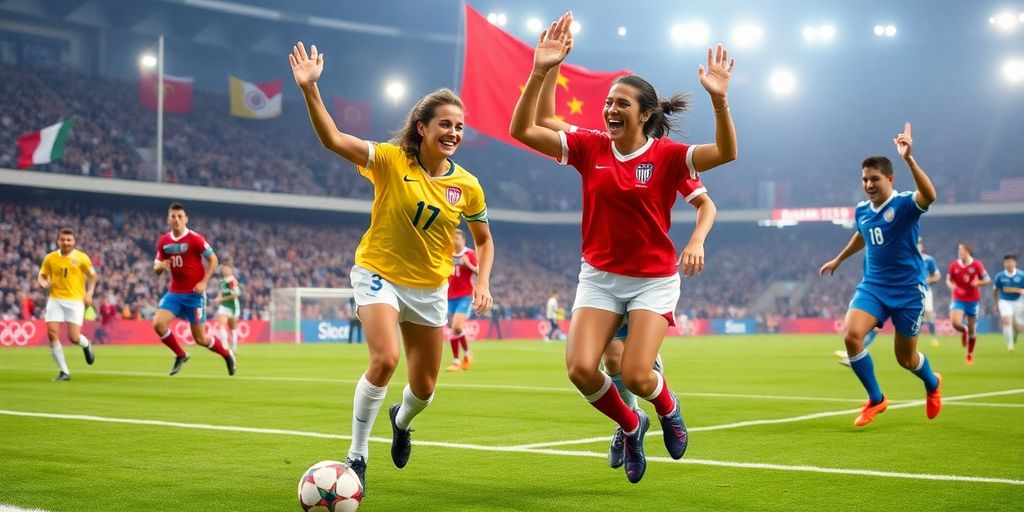
The 1936 Berlin Controversies
The 1936 Olympics in Berlin were marked by political tensions and controversies. Soccer, like many other sports, was not immune to the influence of the Nazi regime. The German team, under immense pressure to perform, faced unexpected challenges. They were eliminated early by Norway, which was a significant blow to the host nation. This match was not just a sporting event but a political statement, as it took place in a stadium filled with swastikas and propaganda.
The Rise of African Nations
African nations began to make their mark in Olympic soccer during the latter half of the 20th century. The 1996 Atlanta Olympics were particularly significant as Nigeria’s "Dream Team" clinched the gold medal, defeating soccer giants like Brazil and Argentina. This victory was not just about the medal; it was a moment of immense pride and a turning point that showcased the potential and talent of African teams on a global stage.
Memorable Matches and Upsets
Olympic soccer has seen its fair share of memorable matches and stunning upsets. One such game was the 2000 Sydney Olympics final, where Cameroon defeated Spain in a dramatic penalty shootout, securing their place in history. The tournament was filled with surprises, but Cameroon’s victory was the highlight, as they overcame the odds and showcased their resilience and skill.
Olympic soccer has always been more than just a competition; it’s a platform where nations come together, showcasing their talent and spirit. The unexpected victories and dramatic matches are what make the Olympics a unique and cherished event in the world of sports.
In the history of women’s soccer at the Olympics, tournaments like these have also highlighted the growing influence and passion for the sport, with events like Norway’s victory in Sydney 2000 and the U.S. reclaiming dominance in London 2012 serving as pivotal moments. The blend of historic achievements and modern triumphs continues to shape the narrative of soccer at the Olympics.
U.S. Soccer’s Journey in the Olympics
Early Participation and Challenges
The U.S. men’s soccer team first entered the Olympic scene way back in 1904. It was a humble beginning, with only three teams competing, two of which were American. Over the years, the men’s team faced numerous challenges, often struggling to make a mark on the international stage. Despite these hurdles, the U.S. continued to participate, gaining experience and exposure.
- 1988 Seoul: Finished at the bottom of their group.
- 1992 Barcelona: The under-23 format was introduced, but injuries hampered their performance.
- 1996 Atlanta: Eliminated in the group stage, despite hosting the event.
The USWNT’s Dominance
The U.S. Women’s National Team (USWNT) has been a powerhouse since women’s soccer was added to the Olympics in 1996. Their debut was nothing short of spectacular, clinching the gold medal and setting the stage for future successes. The team’s dominance is highlighted by their impressive medal haul:
| Year | Medal |
|---|---|
| 1996 Atlanta | Gold |
| 2000 Sydney | Silver |
| 2004 Athens | Gold |
| 2008 Beijing | Gold |
| 2012 London | Gold |
| 2016 Rio | Quarterfinals |
| 2020 Tokyo | Bronze |
The USWNT’s success has not only brought pride but has also inspired countless young athletes around the world.
The USMNT’s Struggles and Comebacks
For the U.S. Men’s National Team (USMNT), the journey has been more of a rollercoaster. The under-23 team, which represents the U.S. in the Olympics, has had its fair share of ups and downs. They reached the fourth place in 2000, showcasing future stars like Landon Donovan and Tim Howard.
- 2000 Sydney: Reached fourth place, narrowly missing out on a medal.
- 2008 Beijing: Group stage exit, but six players went on to play in the 2010 World Cup.
"The U.S. men’s soccer team has often been the underdog, but with determination and grit, they’ve managed to surprise the world on several occasions."
As both teams prepare for future competitions, there’s a sense of hopeful anticipation, especially with the rise of young talent and the continued support for soccer in the U.S. Whether it’s the USWNT’s success or the USMNT’s determination, American soccer continues to evolve and inspire.
Women’s Soccer at the Olympics
The Debut in 1996
Women’s soccer finally got its moment on the Olympic stage in 1996, a full century after the first modern Olympic Games. Held in Atlanta, Georgia, the debut was nothing short of historic. The United States women’s team, featuring stars like Brandi Chastain and Mia Hamm, clinched the gold medal. They beat China 2-1 in a thrilling final that drew a massive crowd of 76,489 fans. This victory wasn’t just a win on the field; it was a statement that women’s soccer had arrived and could draw big audiences all on its own.
Key Rivalries and Matches
The Olympics have seen some epic rivalries in women’s soccer. The U.S. and Norway have clashed several times, with each team having its share of victories. In the 2000 Sydney Olympics, Norway got the upper hand, defeating the U.S. in a nail-biting final with a golden goal. Another memorable match was in 2008 when the U.S. faced Brazil. After a tense game, the U.S. emerged victorious with a 1-0 win, thanks to a goal in extra time by Carli Lloyd.
Impact on Women’s Sports Globally
The inclusion of women’s soccer in the Olympics has had a profound impact on the sport worldwide. It has inspired countless young girls to take up soccer, seeing their heroes compete on such a grand stage. The visibility and recognition have helped push for greater equality in sports, although challenges like pay disparity still exist. The growth of women’s soccer is undeniable, with more countries investing in their women’s teams and young talent emerging from every corner of the globe.
Women’s soccer at the Olympics isn’t just about medals. It’s about breaking barriers and showing the world the strength and skill of female athletes. The journey has been long, but the future looks bright.
Iconic Olympic Soccer Venues

Historic Stadiums and Their Stories
When you think about Olympic soccer, the stadiums themselves often become stars of the show. These places don’t just host games; they hold memories. Take the Maracanã in Rio de Janeiro, for example. Not only did it host the 2016 Olympics, but it’s also a temple of soccer history. Over in London, Wembley Stadium has seen its share of epic Olympic moments, adding to its legendary status. These venues become part of the narrative, each with its own unique story to tell.
Record-Breaking Attendances
Some Olympic matches have drawn crowds that rival any major international tournament. In 1984, the Rose Bowl in Los Angeles set a then-record with a staggering 101,799 fans attending the final. This was a time when soccer was still trying to find its footing in the U.S., making the turnout even more impressive. Such numbers show how the Olympics can captivate audiences and bring people together in ways few other events can.
The Role of Host Nations
Host countries often use the Olympics to showcase their culture and passion for sports, and the stadiums play a big part in this. From the Bird’s Nest in Beijing to the Olympic Stadium in Athens, these venues are more than just backdrops—they’re symbols of national pride. They reflect the host nation’s commitment to sports and their desire to put on a spectacular show. Each stadium, with its architectural flair and enthusiastic crowds, adds a layer of excitement to the Olympic soccer experience.
The stadiums that host Olympic soccer aren’t just structures; they’re landmarks of sports history. Each one, with its own character and charm, contributes to the rich tapestry of Olympic memories, making them unforgettable stops on any soccer pilgrimage.
The Future of Soccer in the Olympics
Potential Changes in Format
The Olympic soccer tournament might see some tweaks in its format. There’s chatter about including more teams, which could open doors for emerging nations. This would mean more matches, possibly stretching the tournament’s length. Expanding the tournament could also lead to a more diverse range of playing styles, making the competition even more exciting.
Emerging Soccer Nations
We’re seeing countries like India and Vietnam making strides in soccer. Their participation in the Olympics could be a game-changer, bringing fresh talent and new fanbases. It’s exciting to think about how these nations could shake up the traditional powerhouses.
The Role of Technology in the Game
Technology’s creeping into every corner of soccer. From VAR to goal-line tech, it’s changing how the game is played and watched. There’s talk of even more tech, like AI-driven analytics, being used to improve team strategies and player performance. In the future, we might see Olympic soccer matches that are not just about skill, but also about how well teams use tech to their advantage.
As the world of soccer evolves, the Olympics offer a unique stage where tradition meets innovation. The blend of emerging nations and advancing technology promises a thrilling future for the sport on this global platform.
Reflecting on Soccer’s Olympic Journey
So, there you have it, a whirlwind tour through soccer’s Olympic history. It’s been a mixed bag for sure, with moments of glory and times of struggle. The U.S. teams have had their ups and downs, but they’ve always shown a fighting spirit. The women’s team, in particular, has been a beacon of success, while the men’s team continues to chase that elusive Olympic glory. As we look forward to future Games, one thing’s for sure: soccer at the Olympics will keep bringing surprises, drama, and unforgettable memories. Here’s to more thrilling matches and maybe, just maybe, a few more medals for the U.S. teams.
Frequently Asked Questions
When did soccer first become part of the Olympics?
Soccer was first included in the Olympics in 1900 as a demonstration sport, but the first official tournament took place in 1908 in London.
Why are professional players allowed in Olympic soccer?
Professional players were allowed to compete starting in 1984 to increase the competition level and attract more interest in the tournament.
What is the under-23 rule in Olympic soccer?
The under-23 rule means that men’s teams can only include players who are under 23 years old, with the exception of three older players.
How has women’s soccer grown in the Olympics?
Women’s soccer was added to the Olympics in 1996, and it has grown significantly, with more teams and increased global interest.
What are some of the most memorable Olympic soccer moments?
Some memorable moments include Nigeria’s victory in 1996 and the U.S. women’s team winning gold in its debut year, 1996.
How does hosting the Olympics impact soccer in a country?
Hosting the Olympics can boost soccer’s popularity in a country, improve infrastructure, and inspire future generations to play the sport.